Through my field research in Karachi’s mangroves, I explore ecofeminism and reclamation of marginal spaces predominantly occupied by men, using the totalizing gaze of my subjects

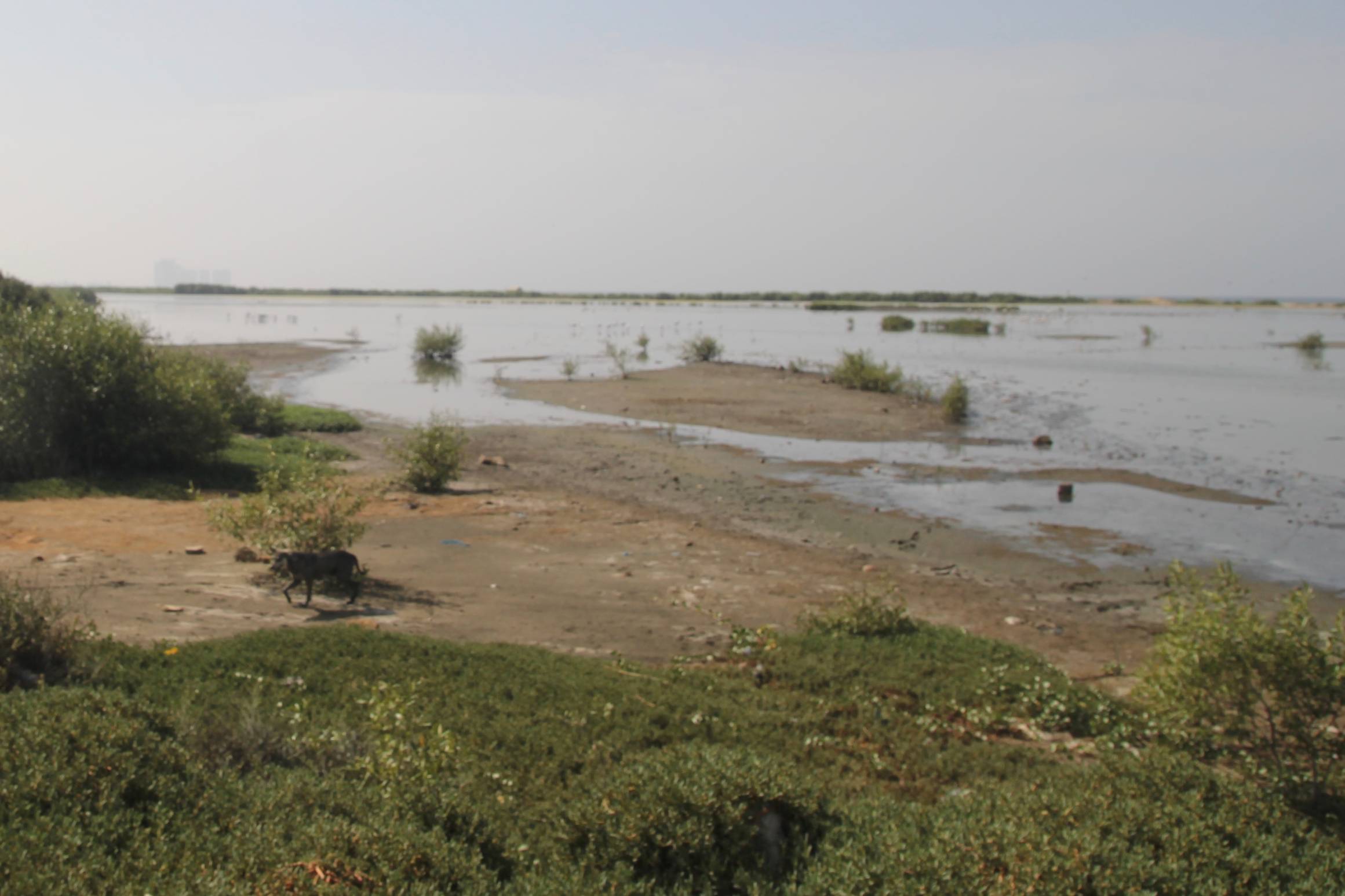
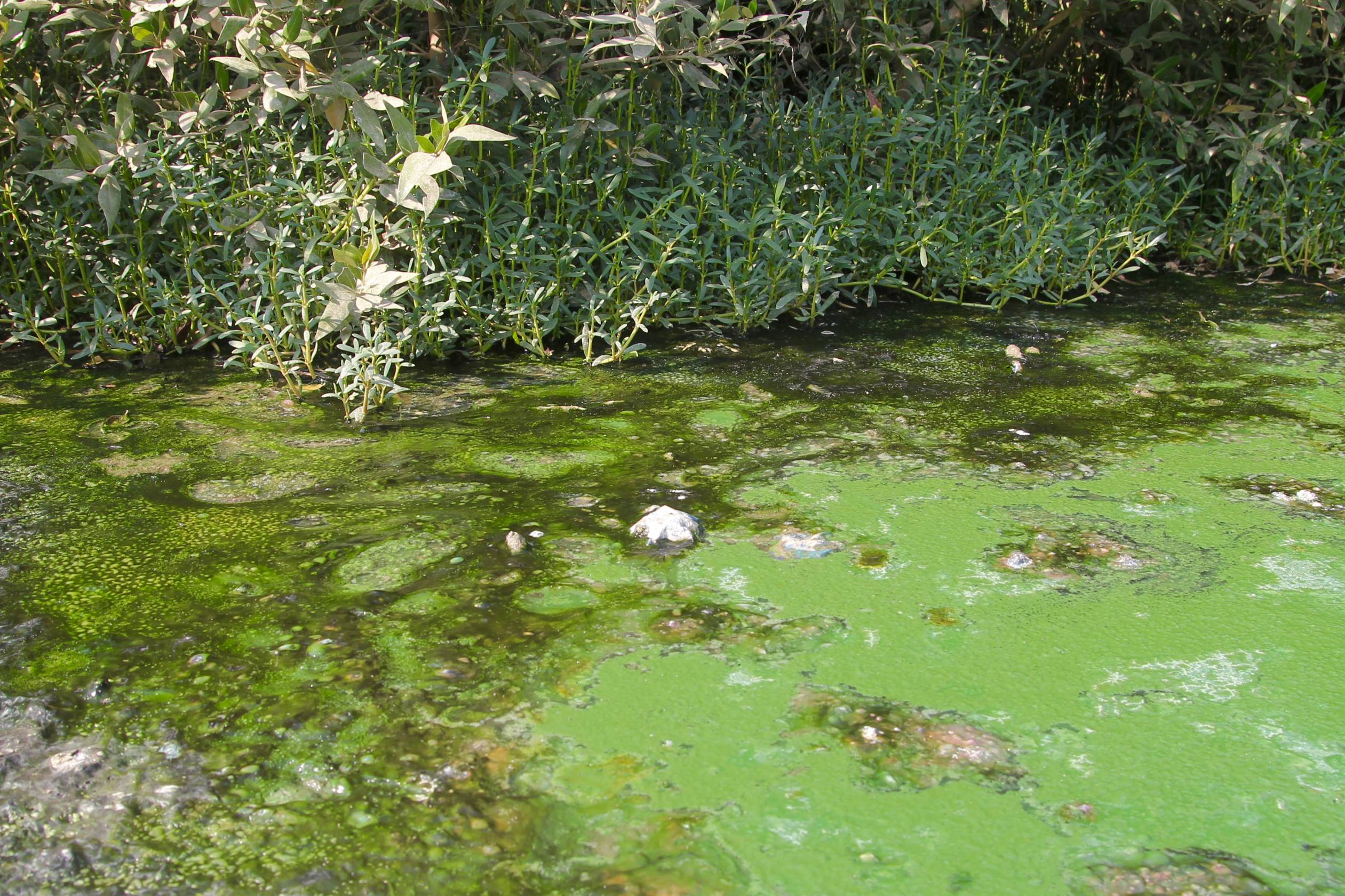
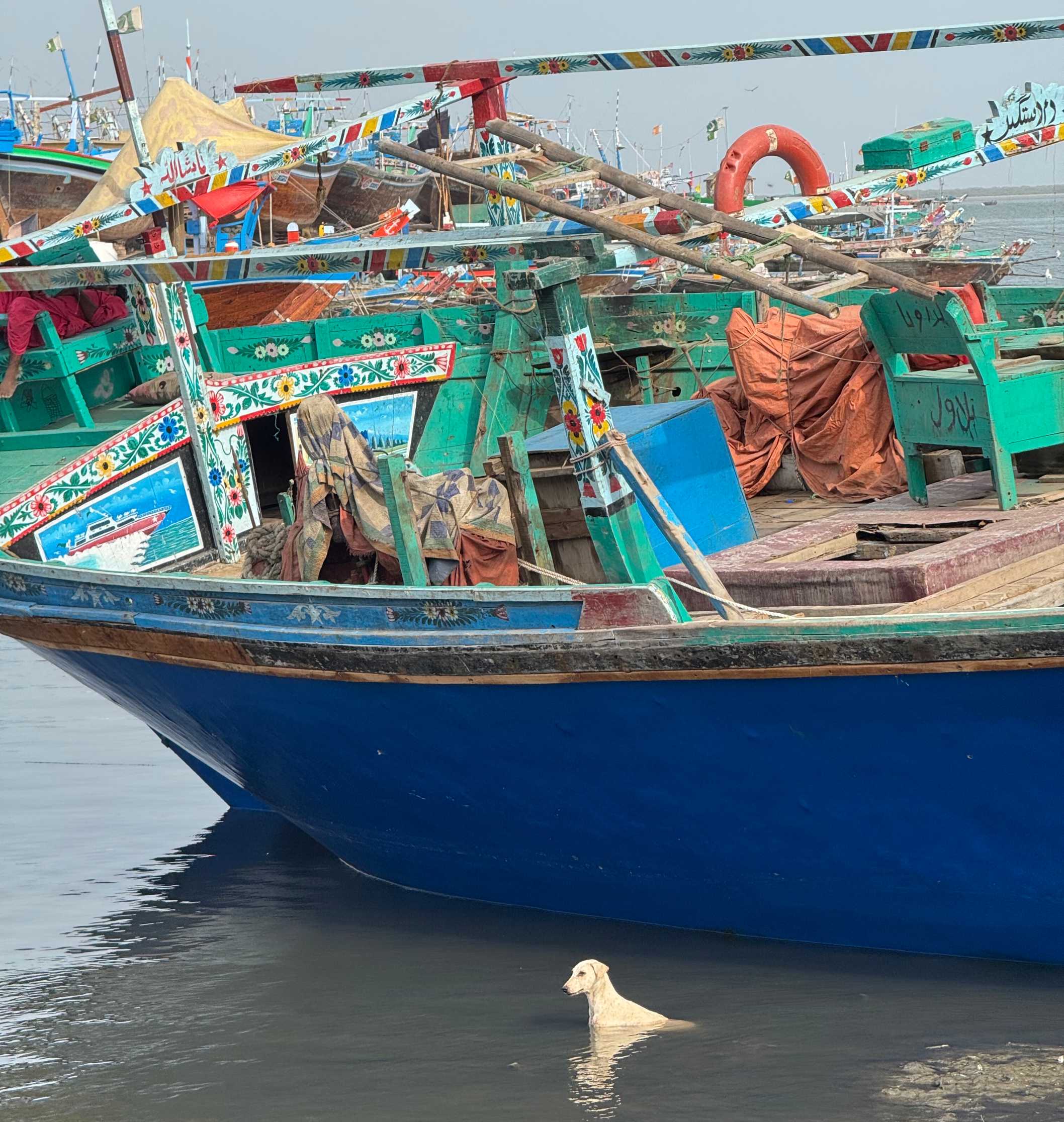
Mangrove Forest, Fish Harbour Road, Ibrahim Hyderi, photographs, Karachi, 2024

My exploration of Karachi’s mangrove forest led me to adopt photography as a research tool, documenting mangrove ecologies and tracing parallels between water systems and female bodies shaped by their geographic placement and the social and symbolic connotations these bodies produce

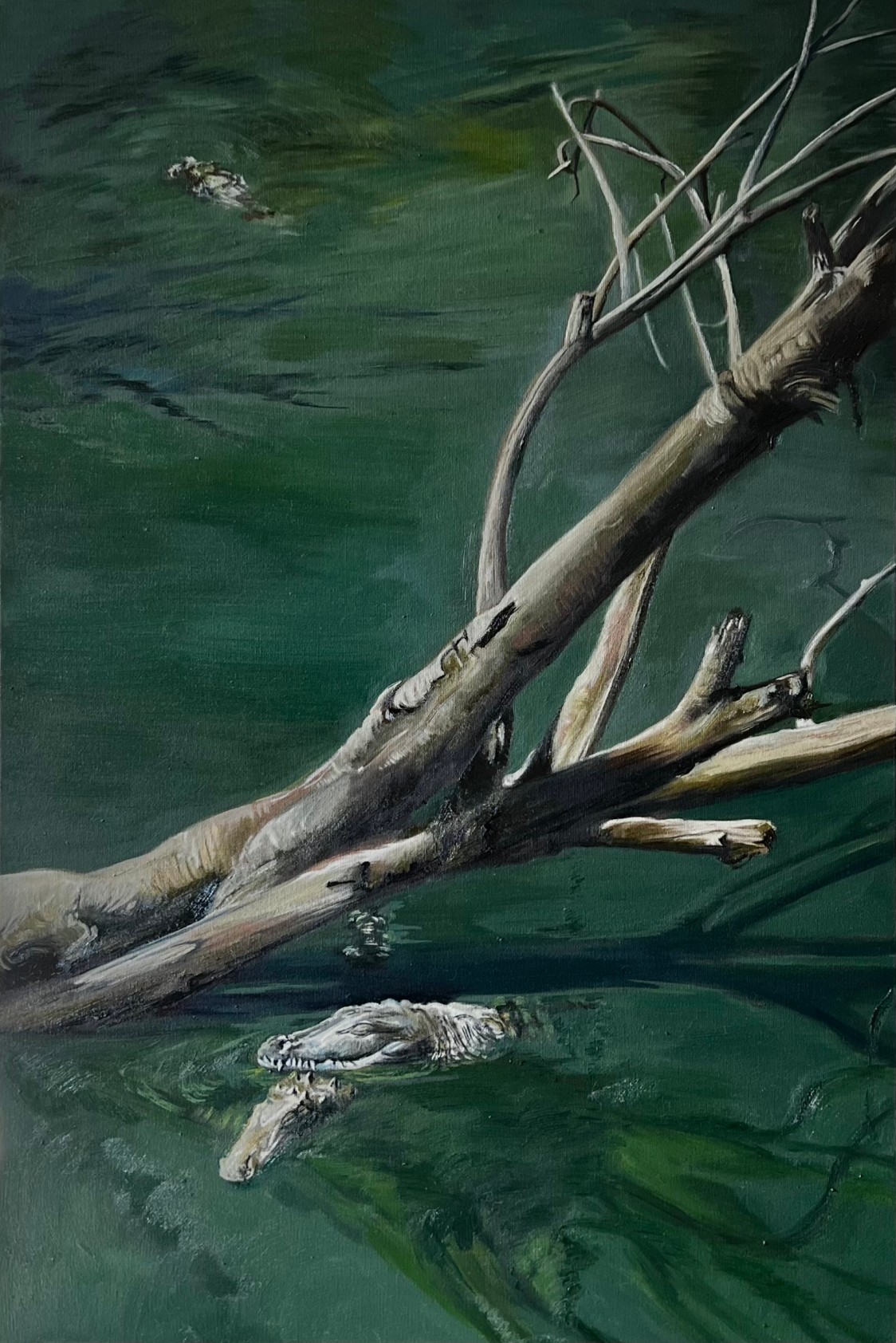
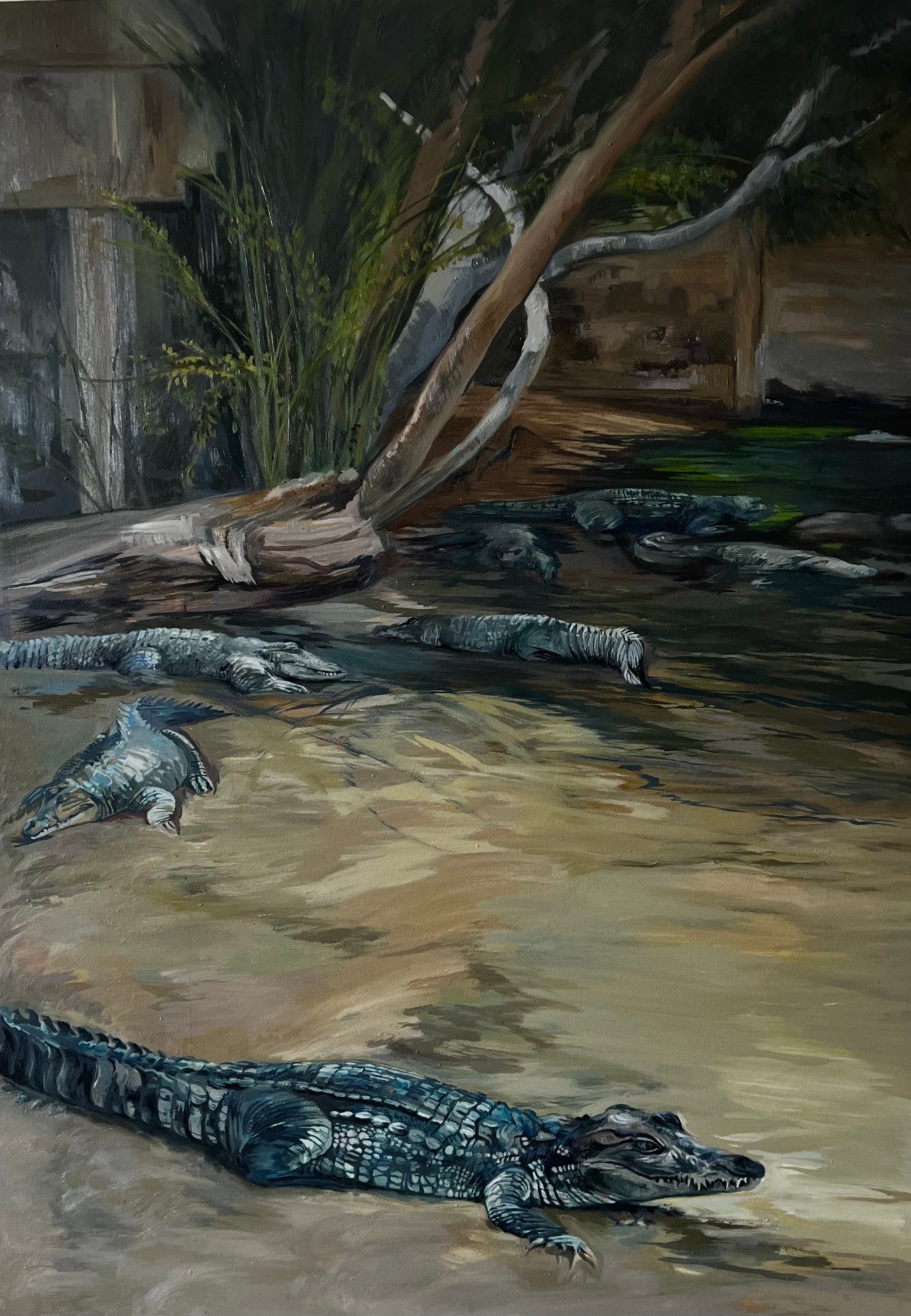
Paintings, in my studio, 2025

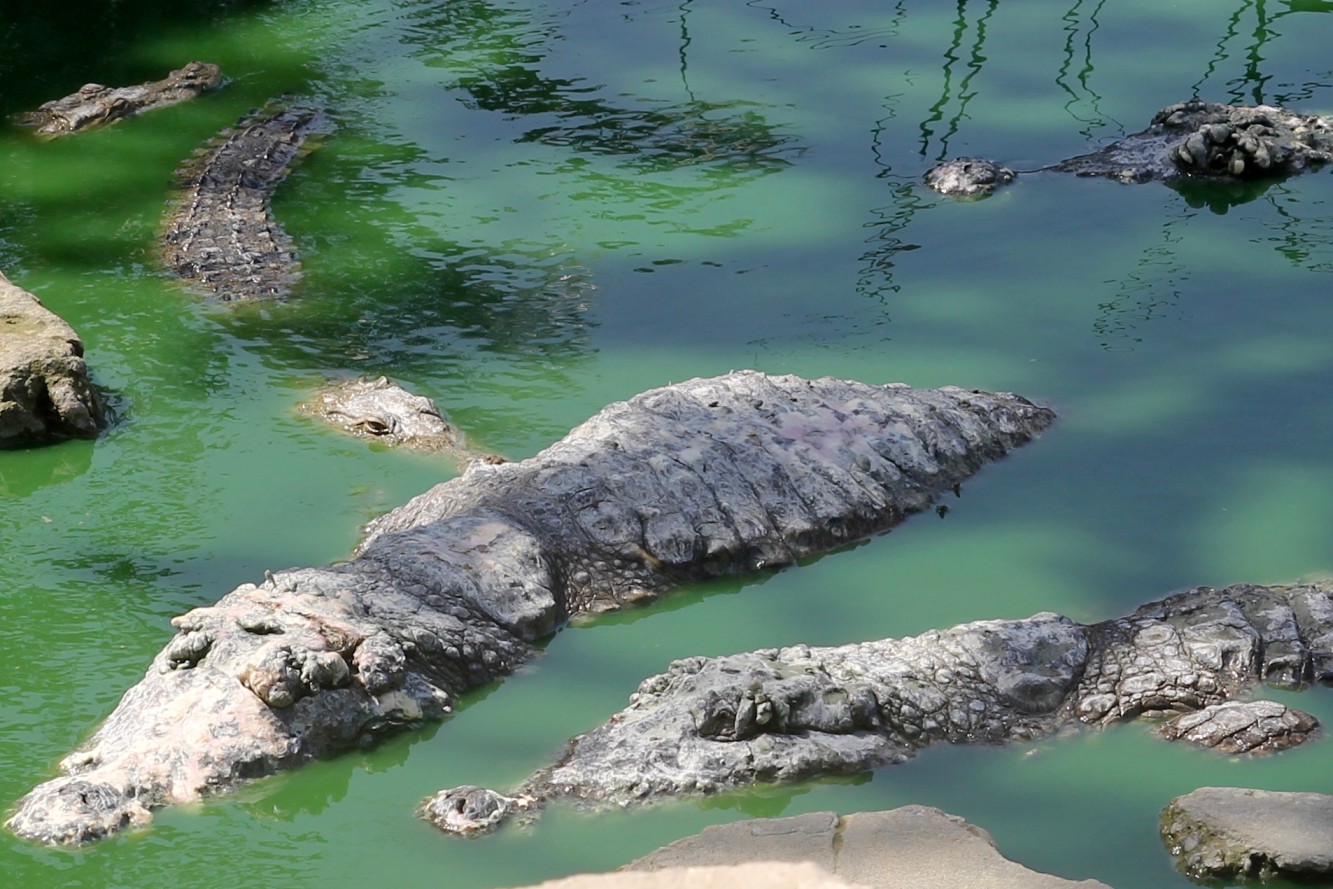
Manghopir, photograph, Karachi, 2024

This led me to Manghopir, a shrine in Karachi where crocodiles are regarded as ancient custodians of sacred waters and sustained through ritual feeding practices. Examining these non-human bodies became a conceptual anchor in my ongoing inquiry into water, ownership and non-human agency

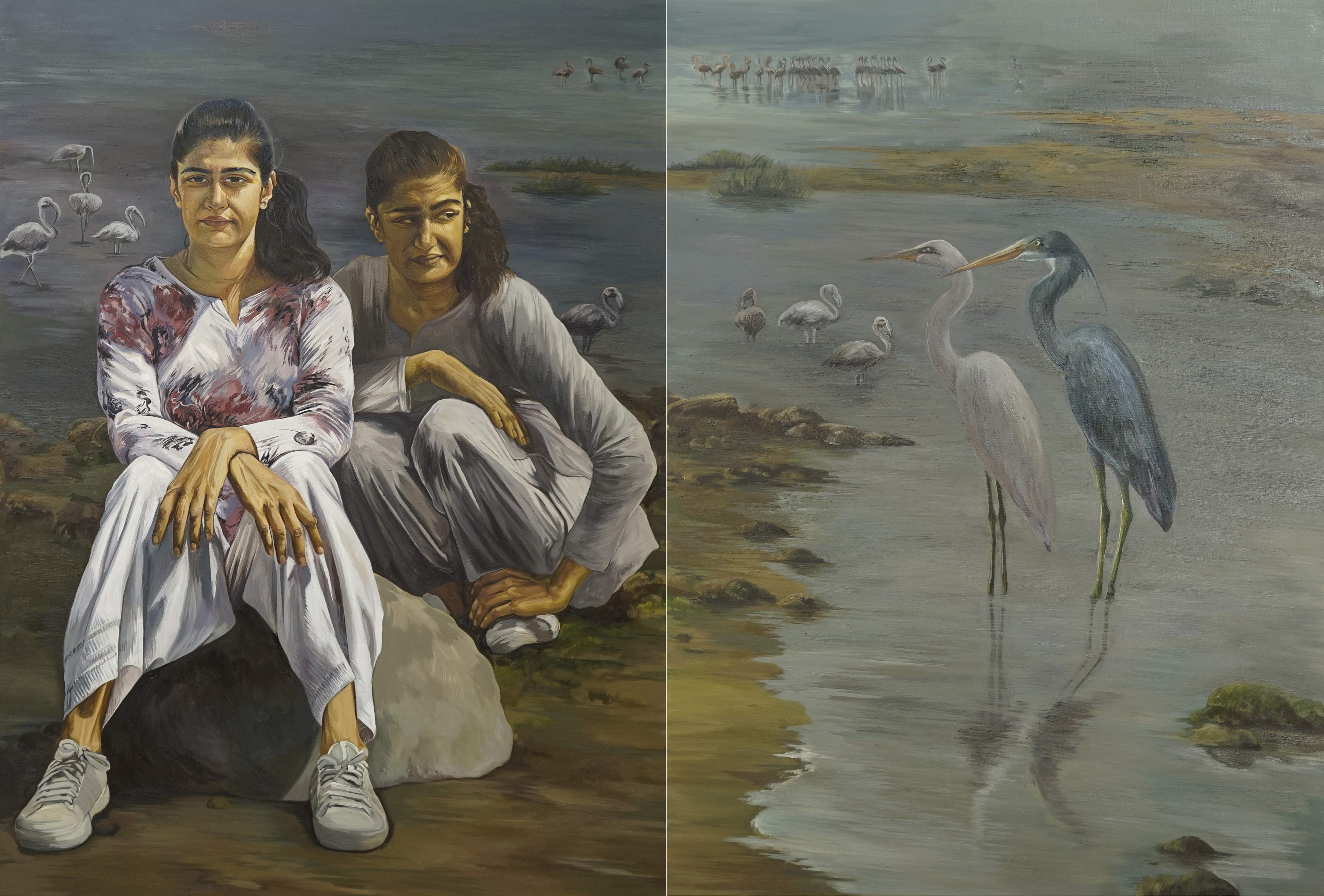
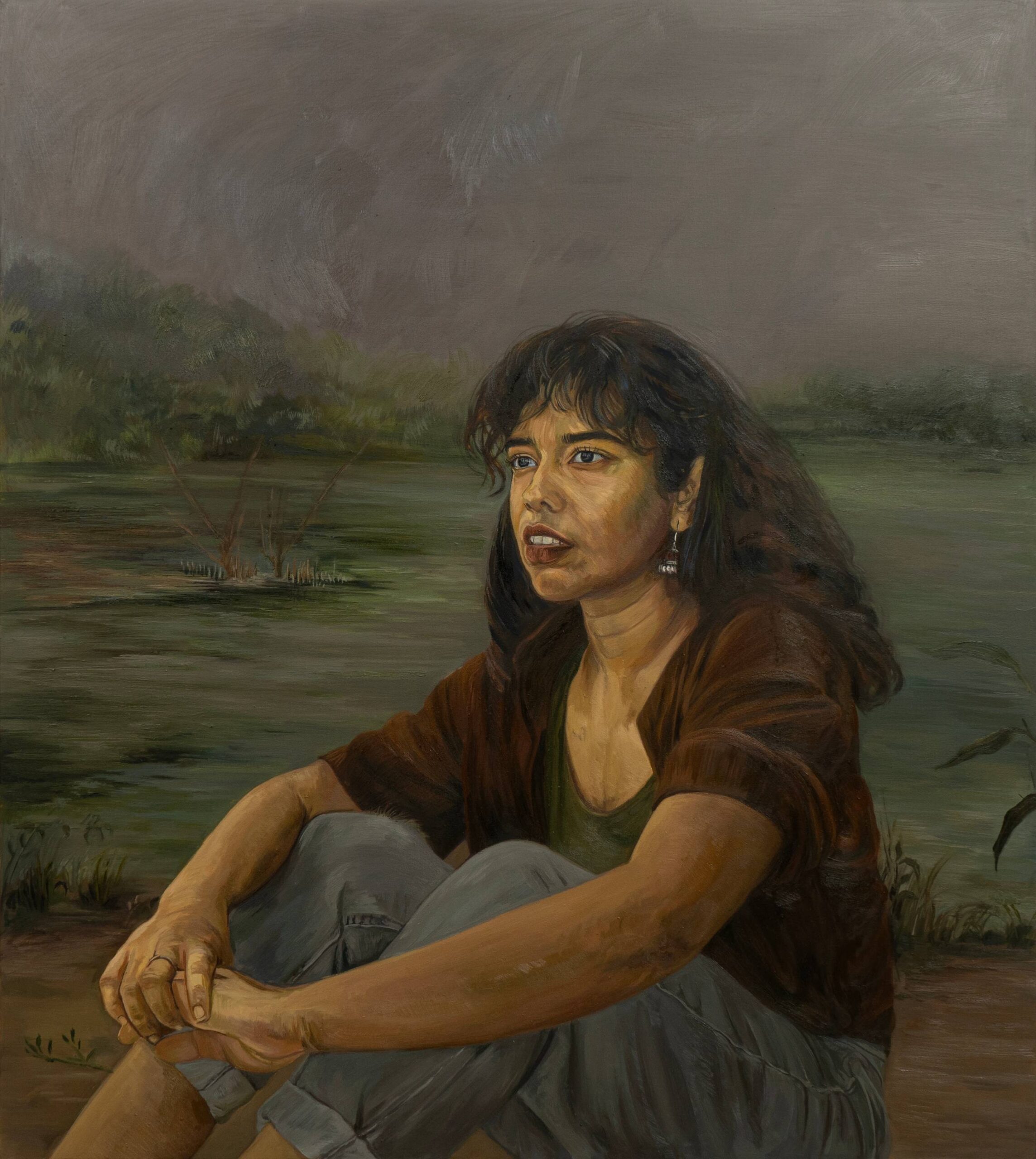
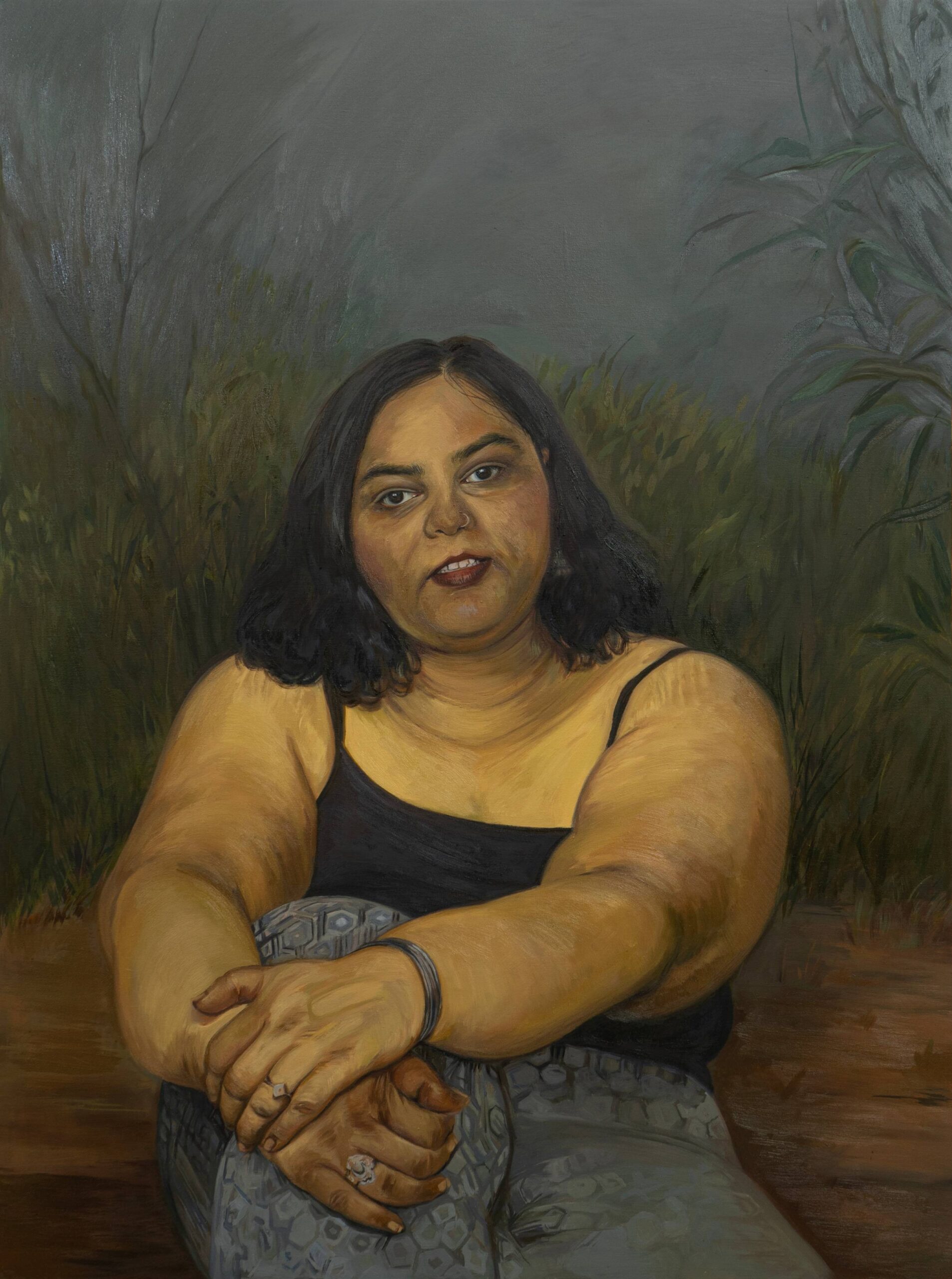
Veera's Self Eyes Egret's Self in an Urban Forest I

‘Veera’s Self Eyes Egret’s Self in an Urban Forest’ (diptych), 2024, oil on canvas, 50 x 40” each

Light spills dramatically over my subject as an egret meets her gaze. In that moment, two selves emerge: my subject’s and the egret’s, both intertwined in a wordless dialogue, a quiet exchange of seeing and being seen

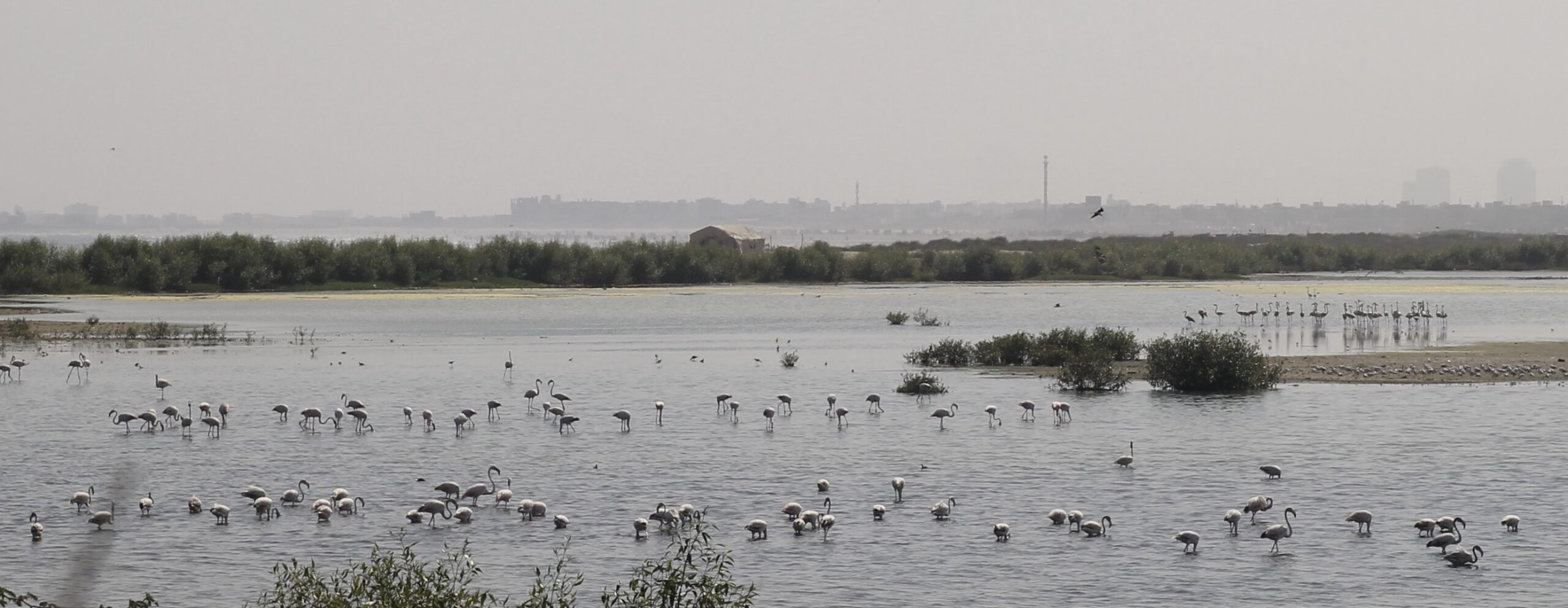
Urban Forest, Clifton, photographs, Karachi, 2023

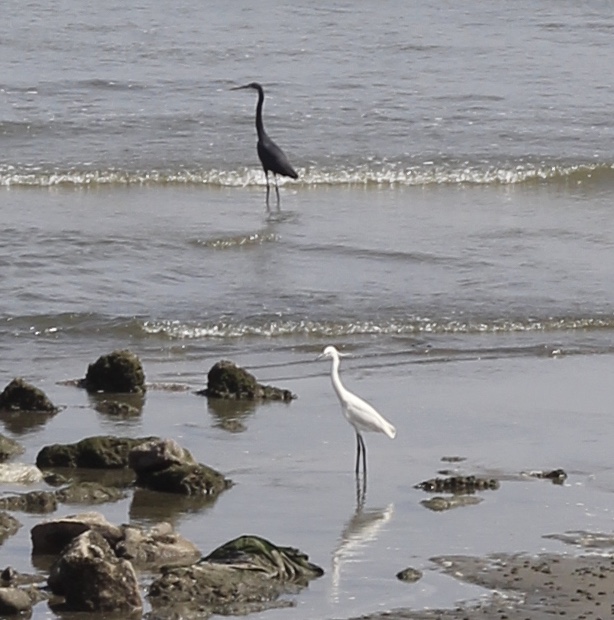
Seeking to understand water habitats more deeply, I began observing flamingos and egrets resting in Karachi's water bodies, negotiating human-made habitats. This process extended my research into the wider water networks of the Indus Flyway. Reading into the intricate webs where human and non-human communities merge, I explore the water politics that shape the behaviours and forms of life dependent on water 

Urban Forest, photograph, Karachi, 2023

DSC07663

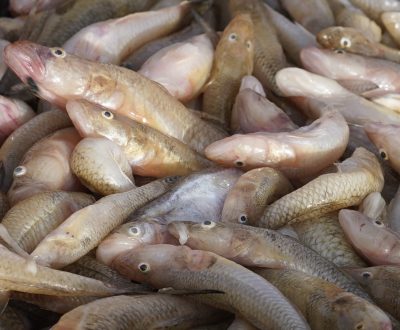
Local fisherman's catch, photograph, Karachi, 2025

Engaging with these multi-species narratives let my practice to expand beyond the human, attending to life forms forced into new behaviours and roles by water scarcity, water politics and ecological collapse

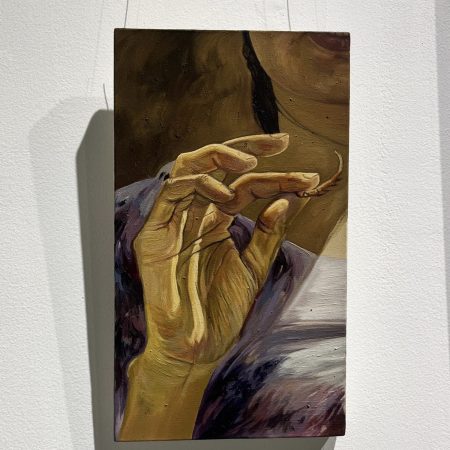
Veera Finds a Lone Crab Leg (display)

Veera Finds a Lone Crab Leg (displayed), 2024, oil on canvas, 14 x 8”

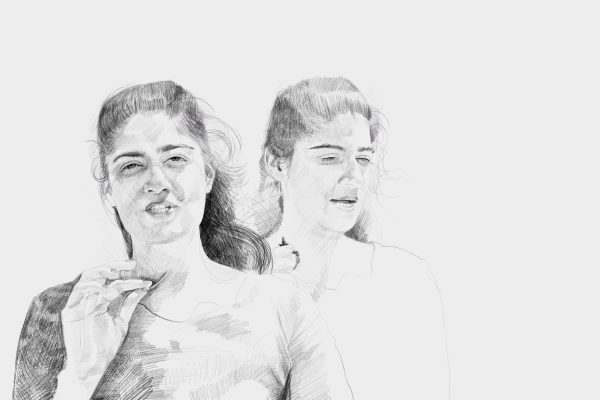
Veera with a broken crab leg, digital drawing, 2024

Veera with a broken crab leg, 2024, digital drawing

The work reflects on the cost of human intervention in marine life

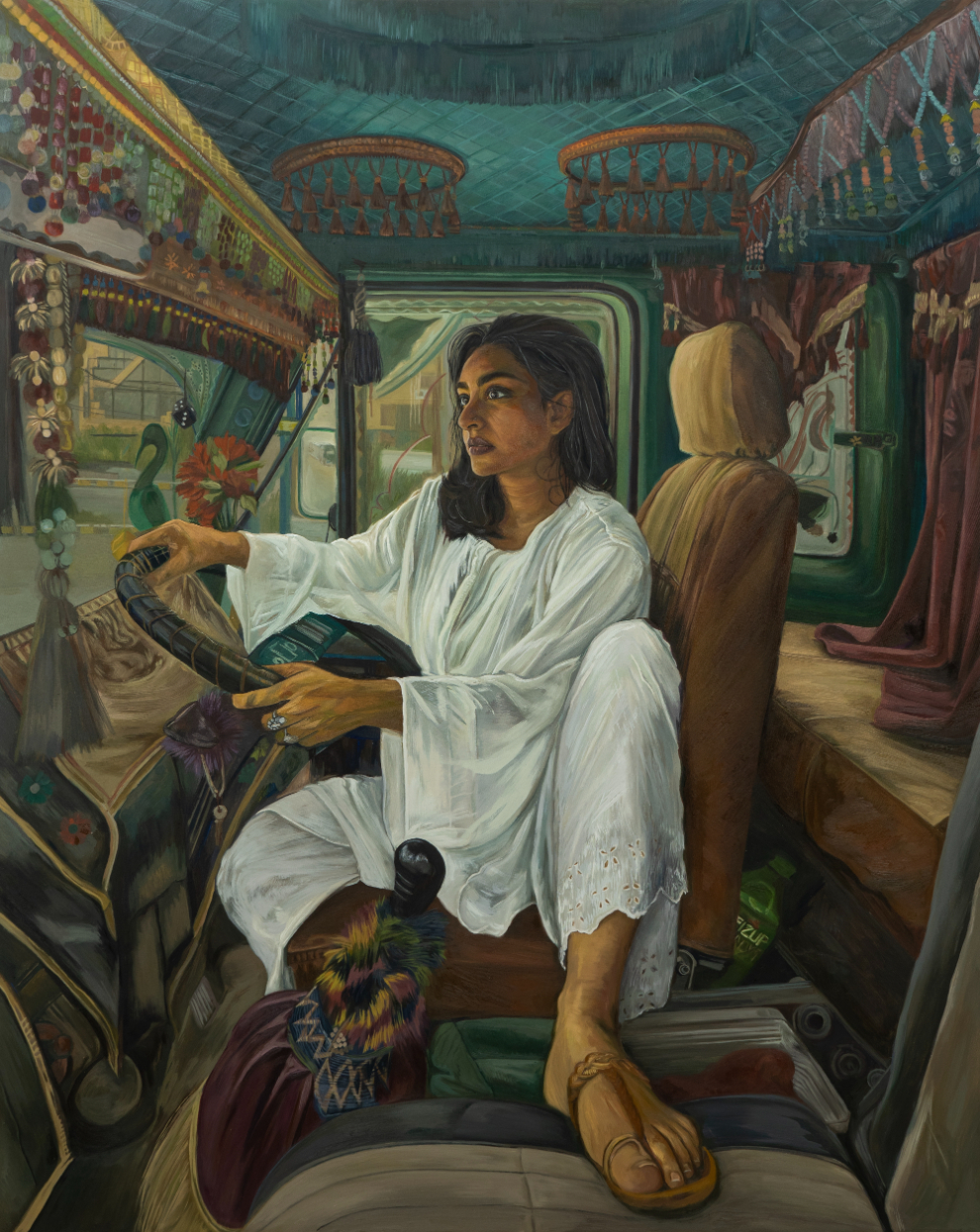
The Unfamiliar Driver

The Unfamiliar Driver, 2025, oil on canvas, 48 x 60”

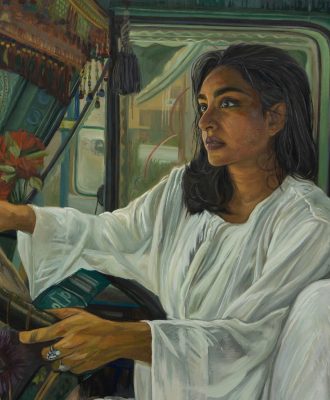
The Unfamiliar Driver (detail) (1)

Detail

Drawing from my experience of driving through Korangi, this work reflects on how water tankers occupy urban spaces in Karachi. By placing a female figure driving a water tanker in a male dominated landscape, I explore disruptions of gender norms and position Karachi’s water infrastructures as sites of power shaped by class-stratified access to water 

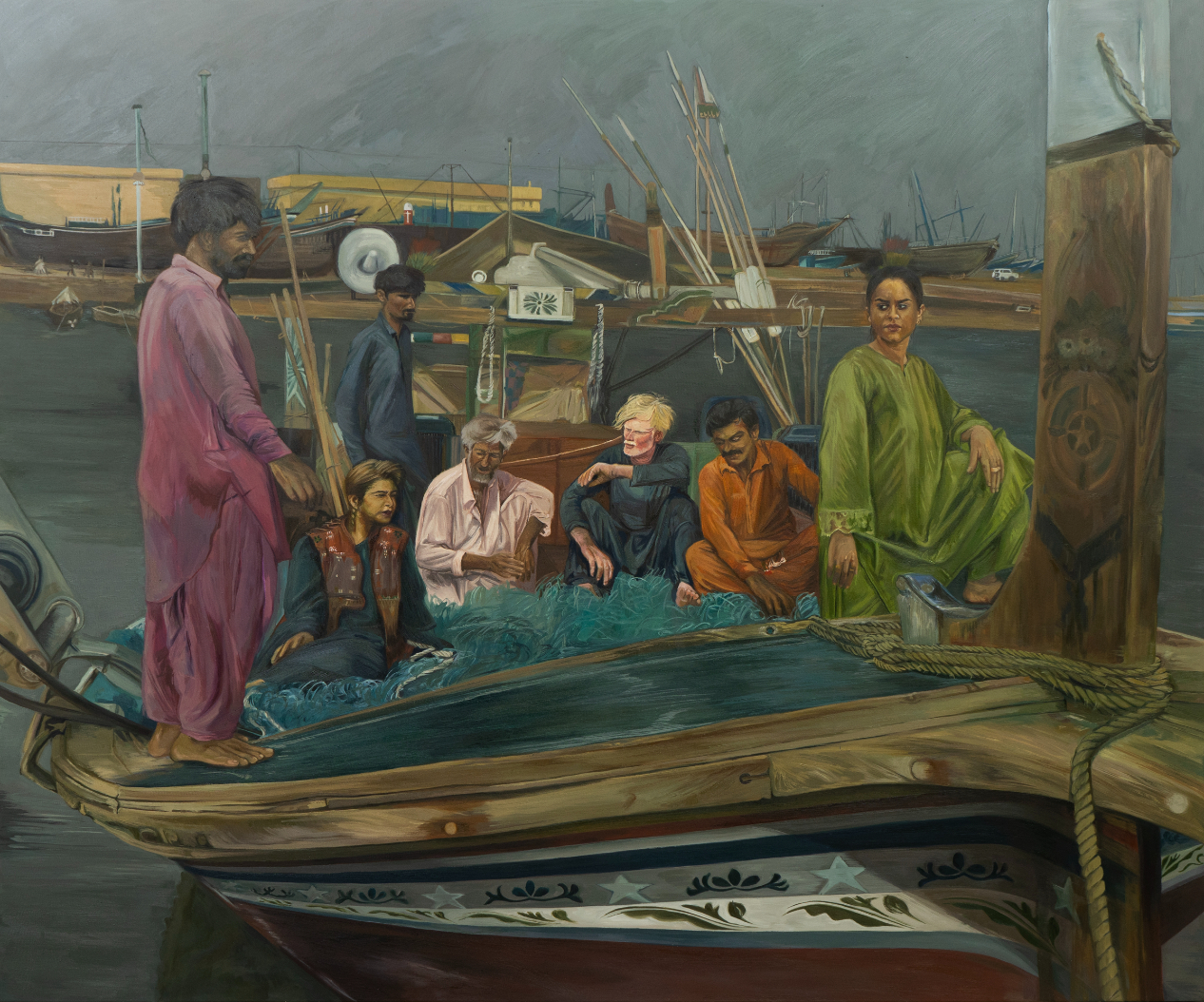
She Takes the Helm, 2025, oil on canvas, 70 x 60”

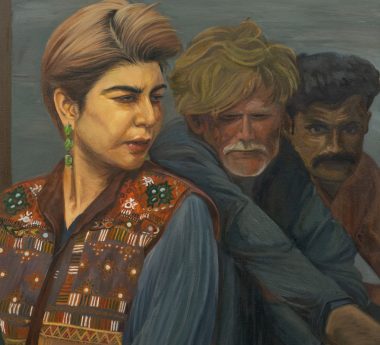
She Takes the Helm 2

She Takes the Helm, 2025, oil on canvas, 24 x 36” 

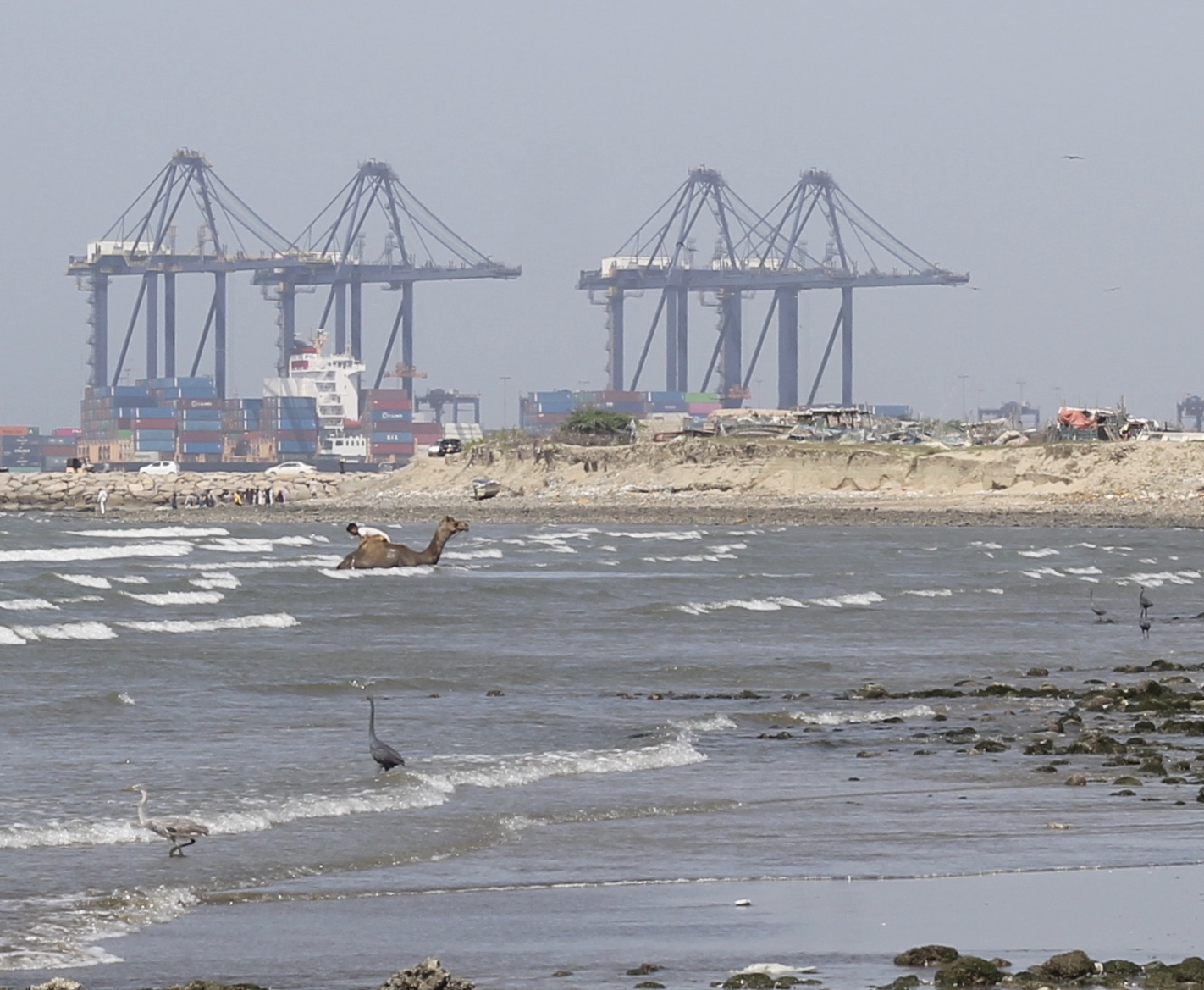
My research extended to Ibrahim Hyderi, historic custodians of a coastal creek, where a fisherfolk community, the indigenous cartographers of Karachi’s waters, has been displaced due to elite housing developments, with water politics driving them into informal settlements. My literary sources revealed how international trawlers sweep the seabed/floor and coral reefs, whereas local poorer fisherfolk follow accessible and sustainable fishing practises, which highlights the imbalance of access to the water 


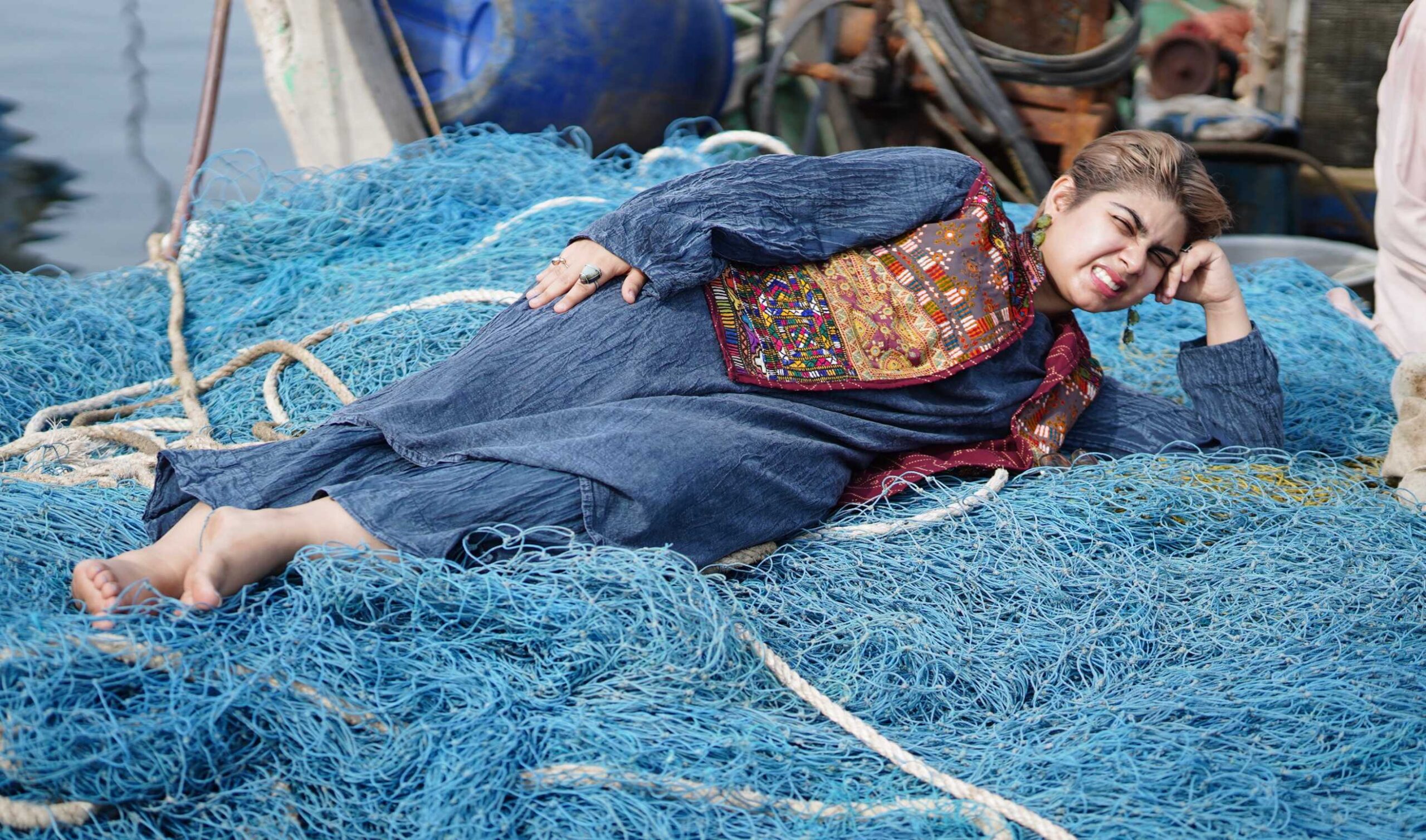
Ibrahim Hyderi, photographs, Karachi, 2025

While contemporary fishing culture is largely male-dominated, Karachi’s maritime history includes women as boat owners and commanders, most notably Mai Kolachi, after whom the city is named. I became interested in how the boat becomes both vessel and a witness to erasure and a site through which female presence is reclaimed within coastal space

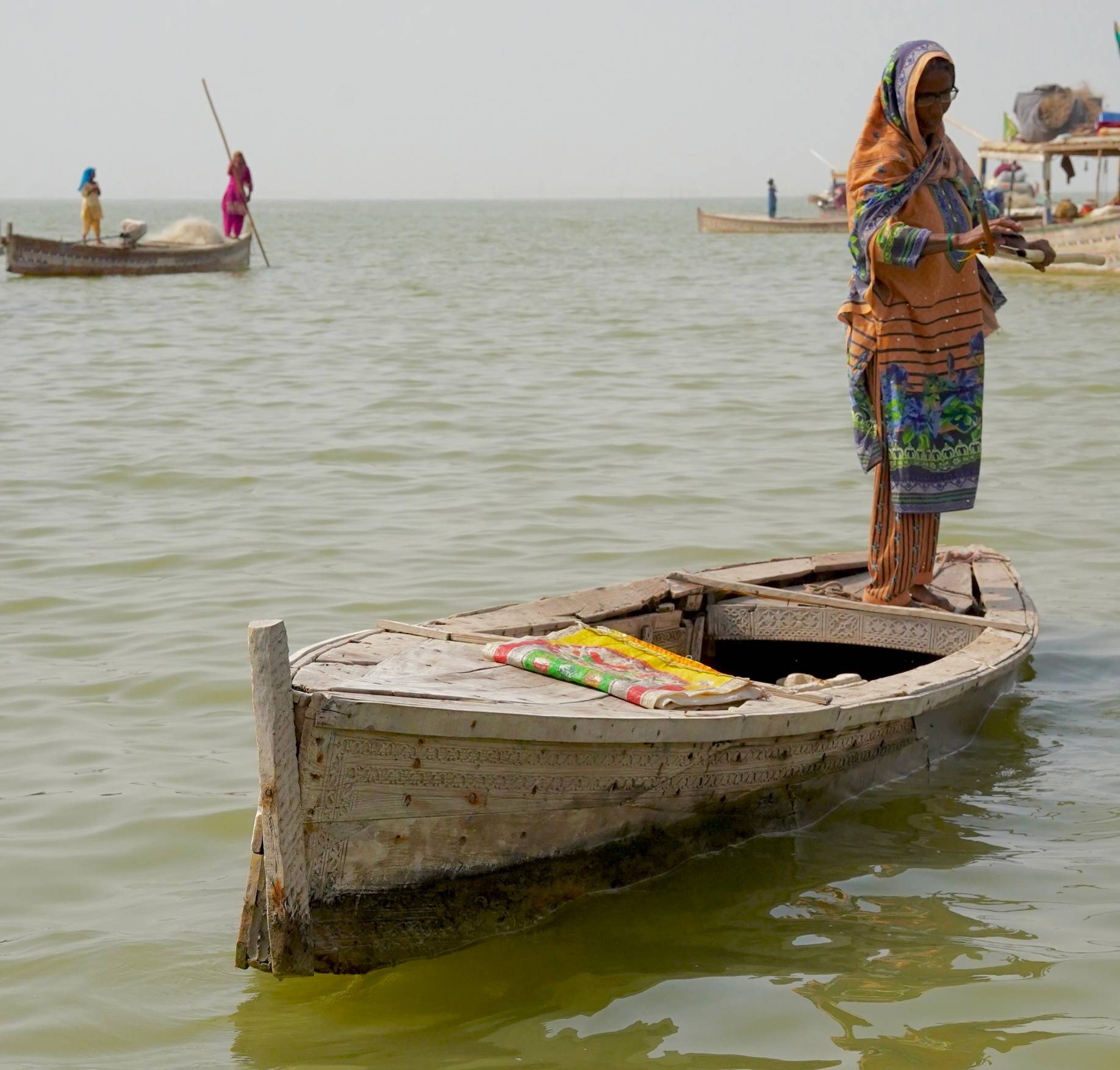
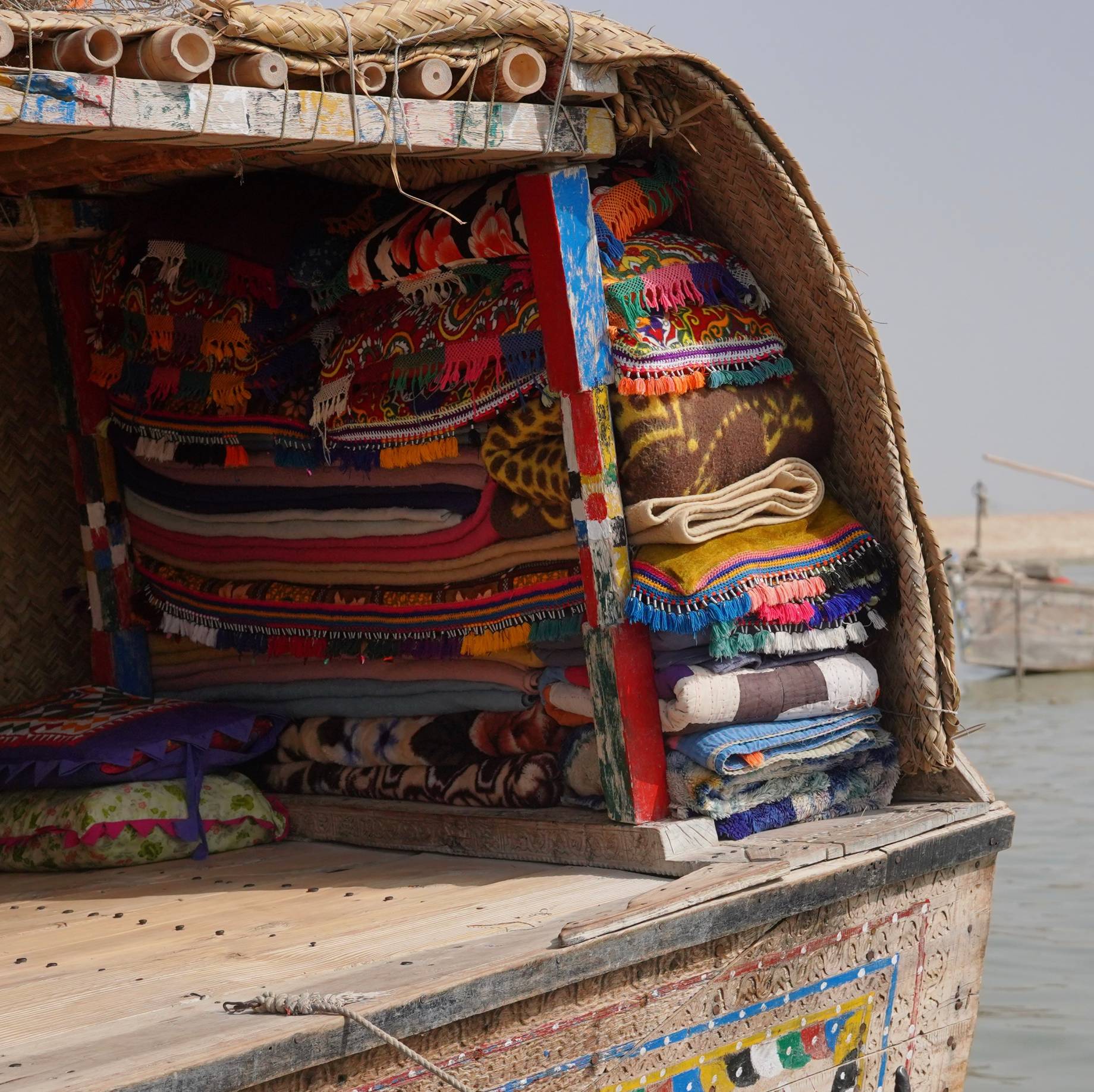
Photographs, Manchar Lake, Sindh, 2025

In November 2025, a research-based residency at Manchar Lake in interior Sindh, Pakistan, marked a shift in my observations from Karachi’s coast  to Sindh’s historical freshwater ecosystem and the site of the boat-dwelling fisherfolk Mohanna community

DSC07664
IMG_2788

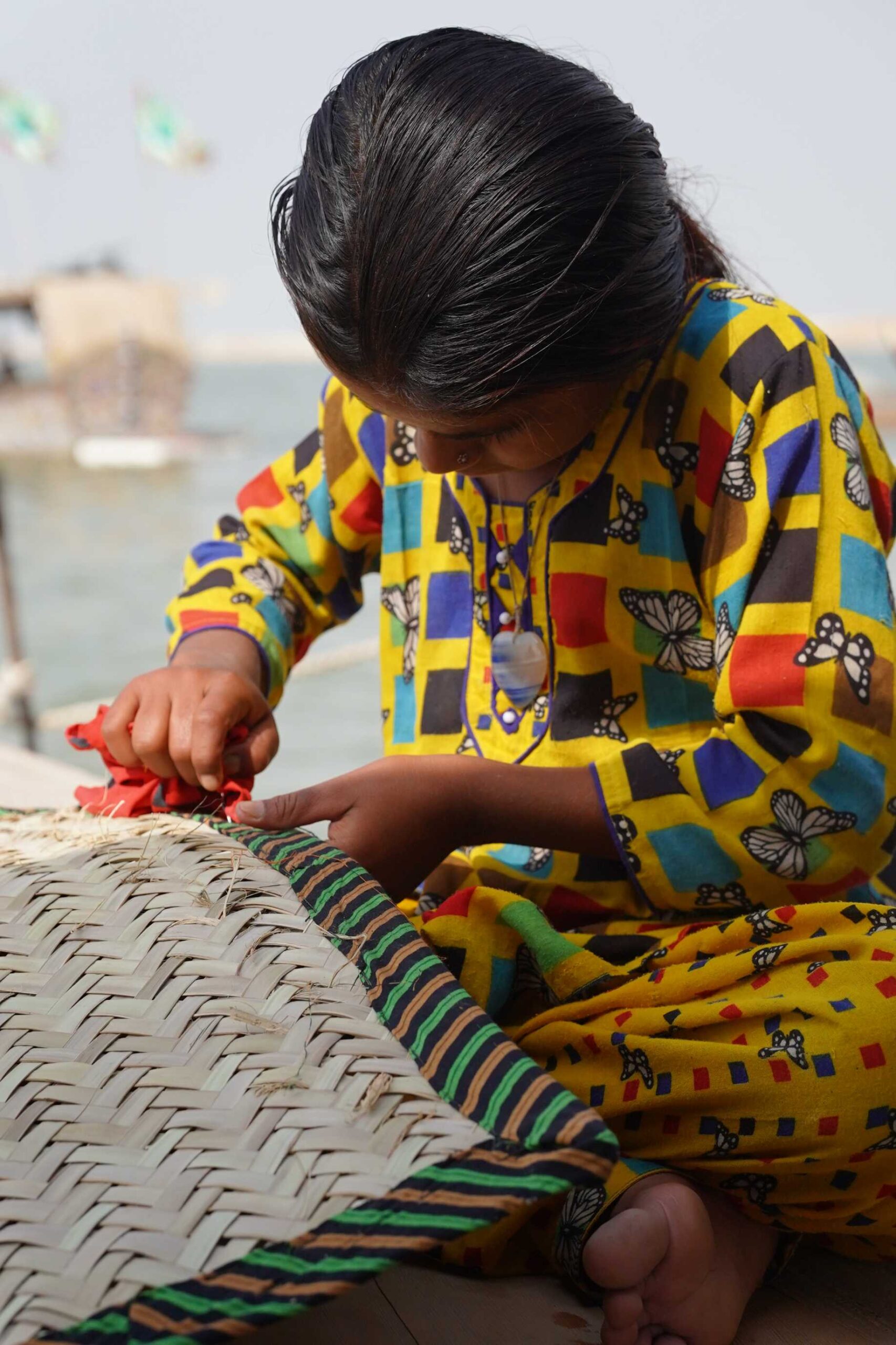
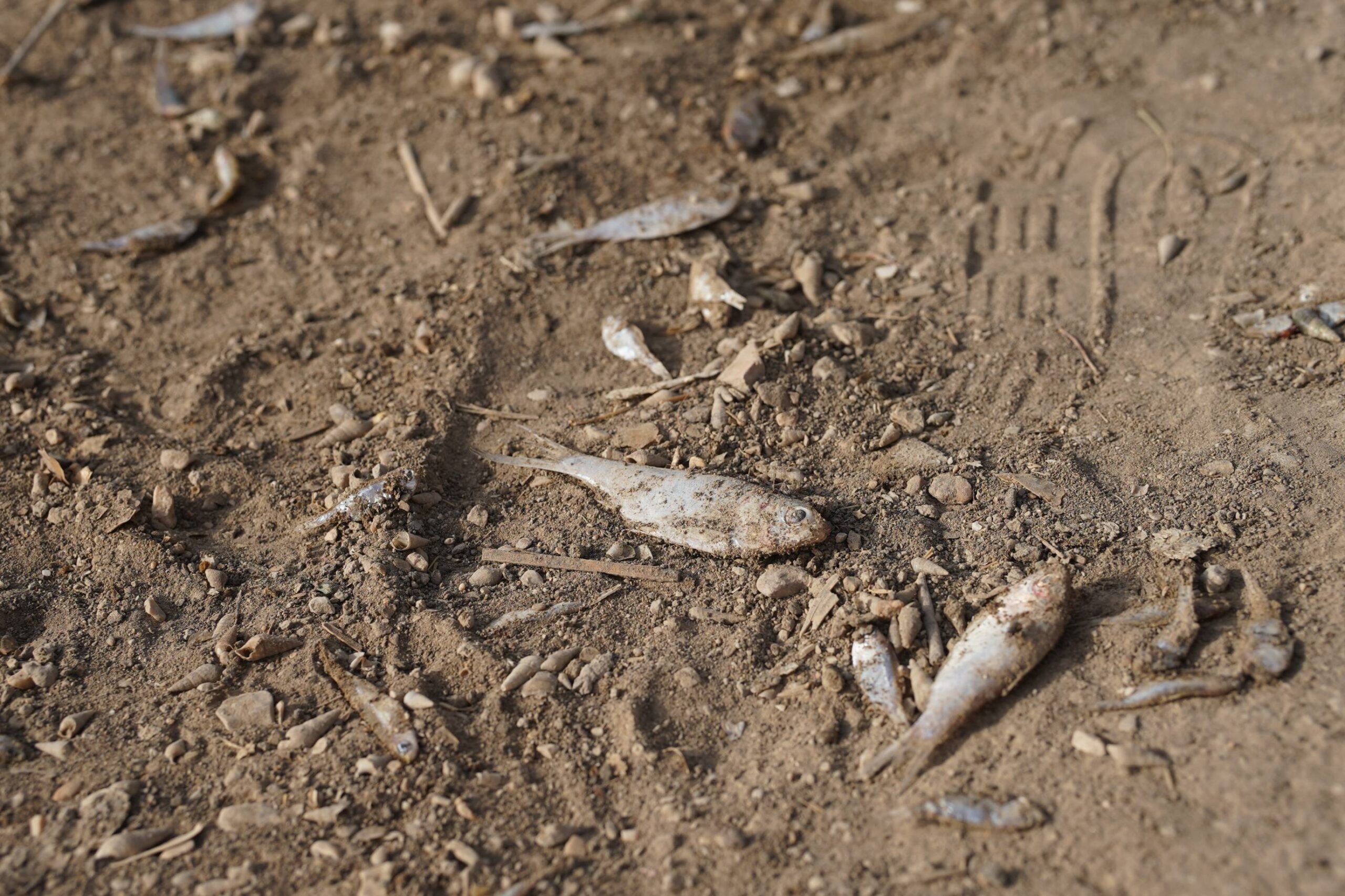
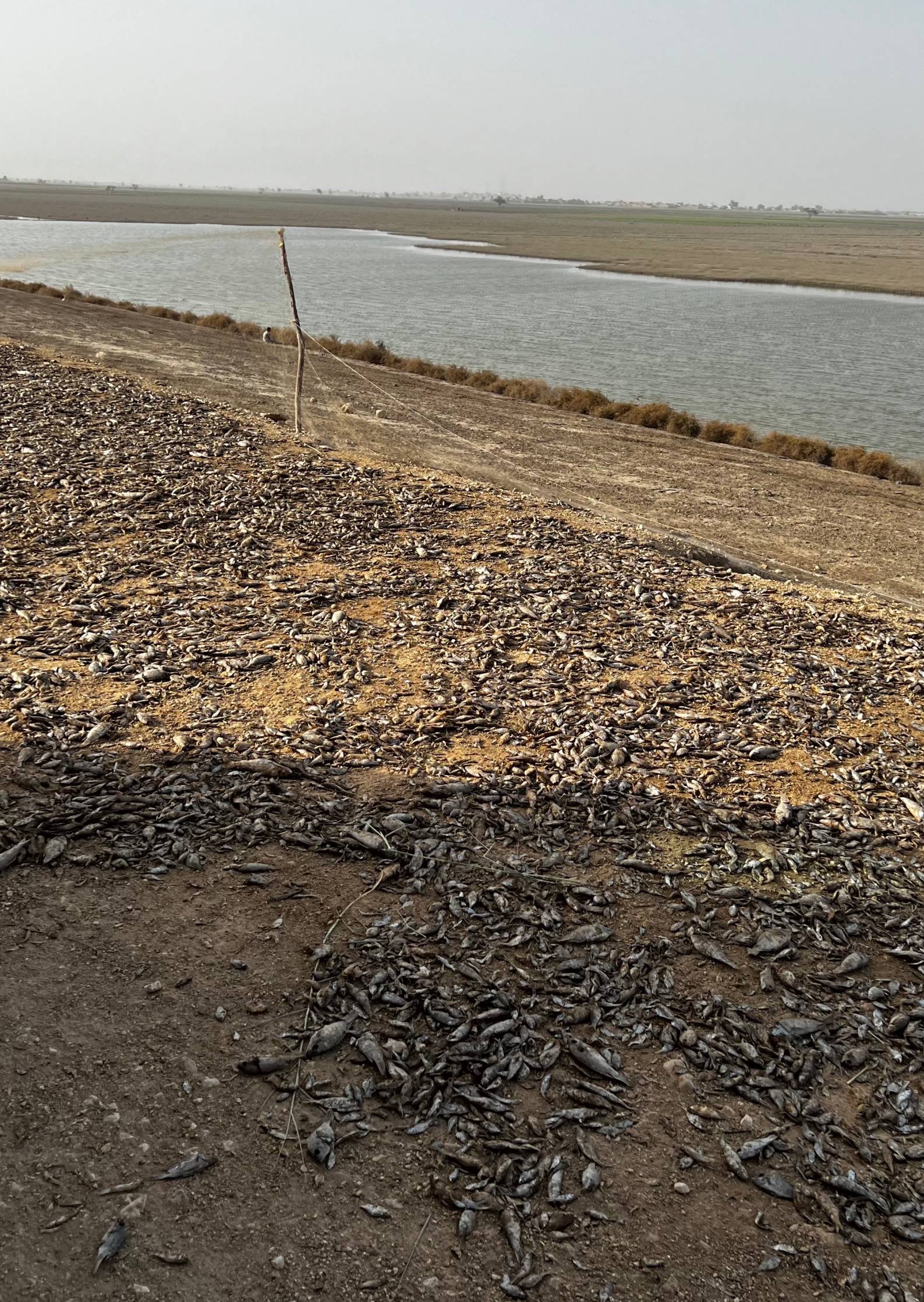
Photographs, Manchar Lake, Sindh, 2025

I encountered dried fish which allowed me to further deepen questions first explored in earlier works, such as the piece where Veera is depicted holding a broken crab leg and became increasingly interested in the non-human water residents in the Manchar lake

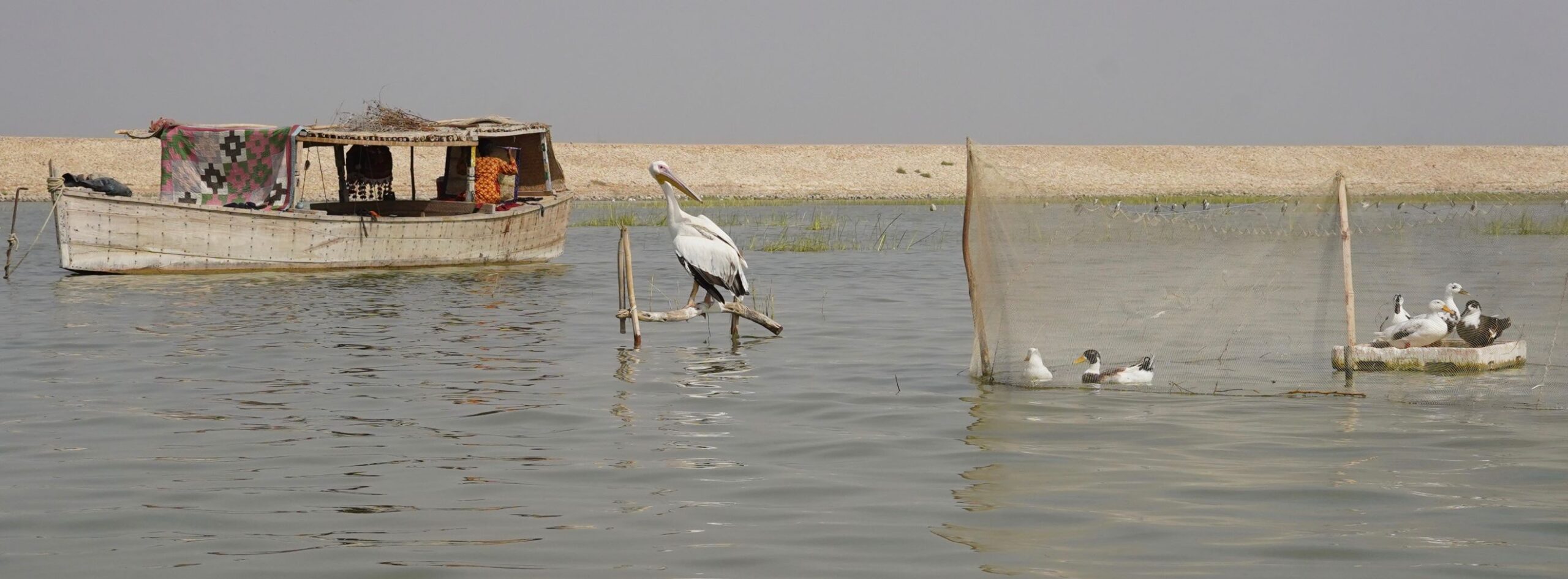
Photographs, Manchar Lake, Sindh, 2025

image00007

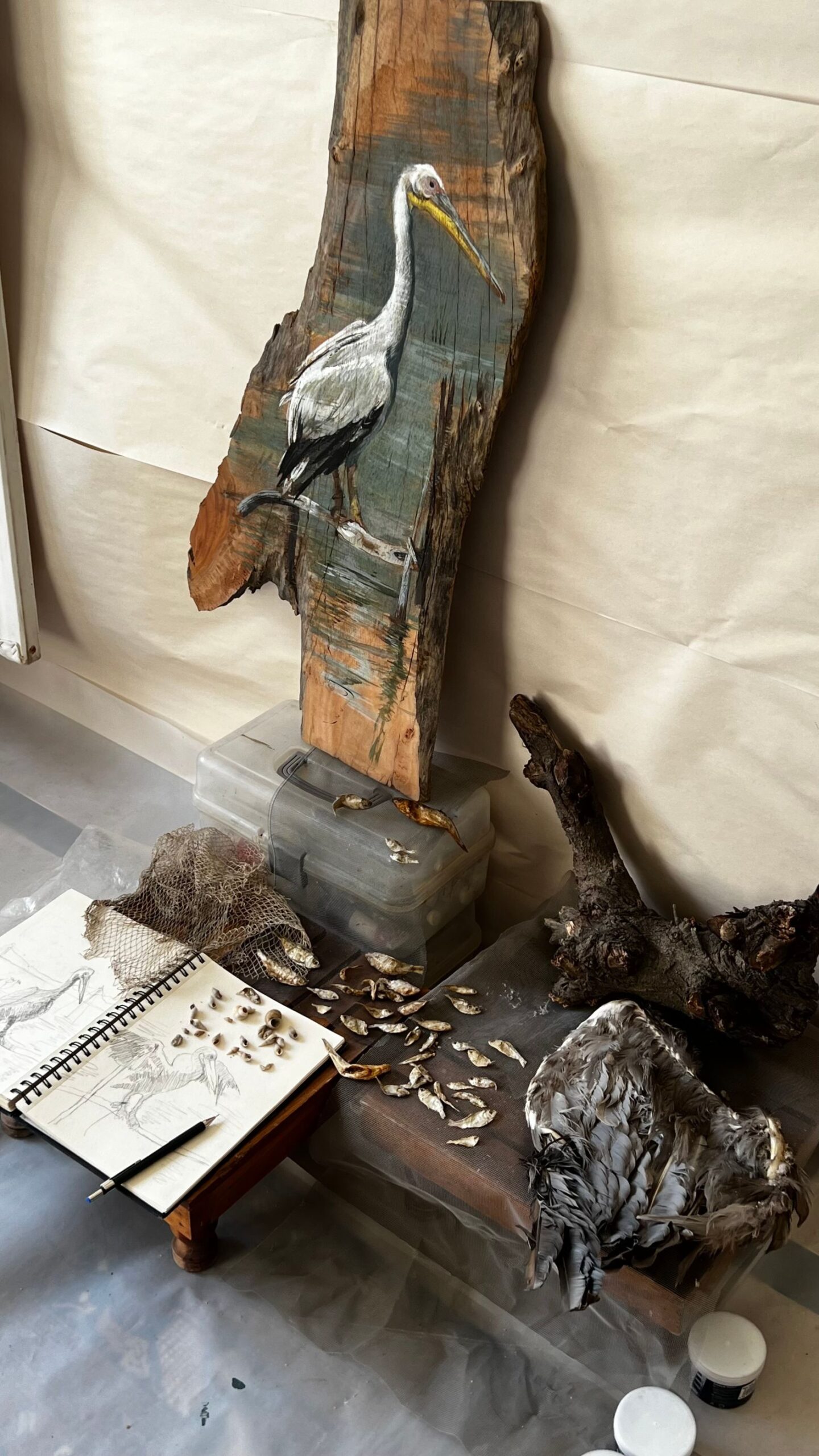
When the Birds Forgot to Fly, developed through site research in Manchar, Sindh, 2025

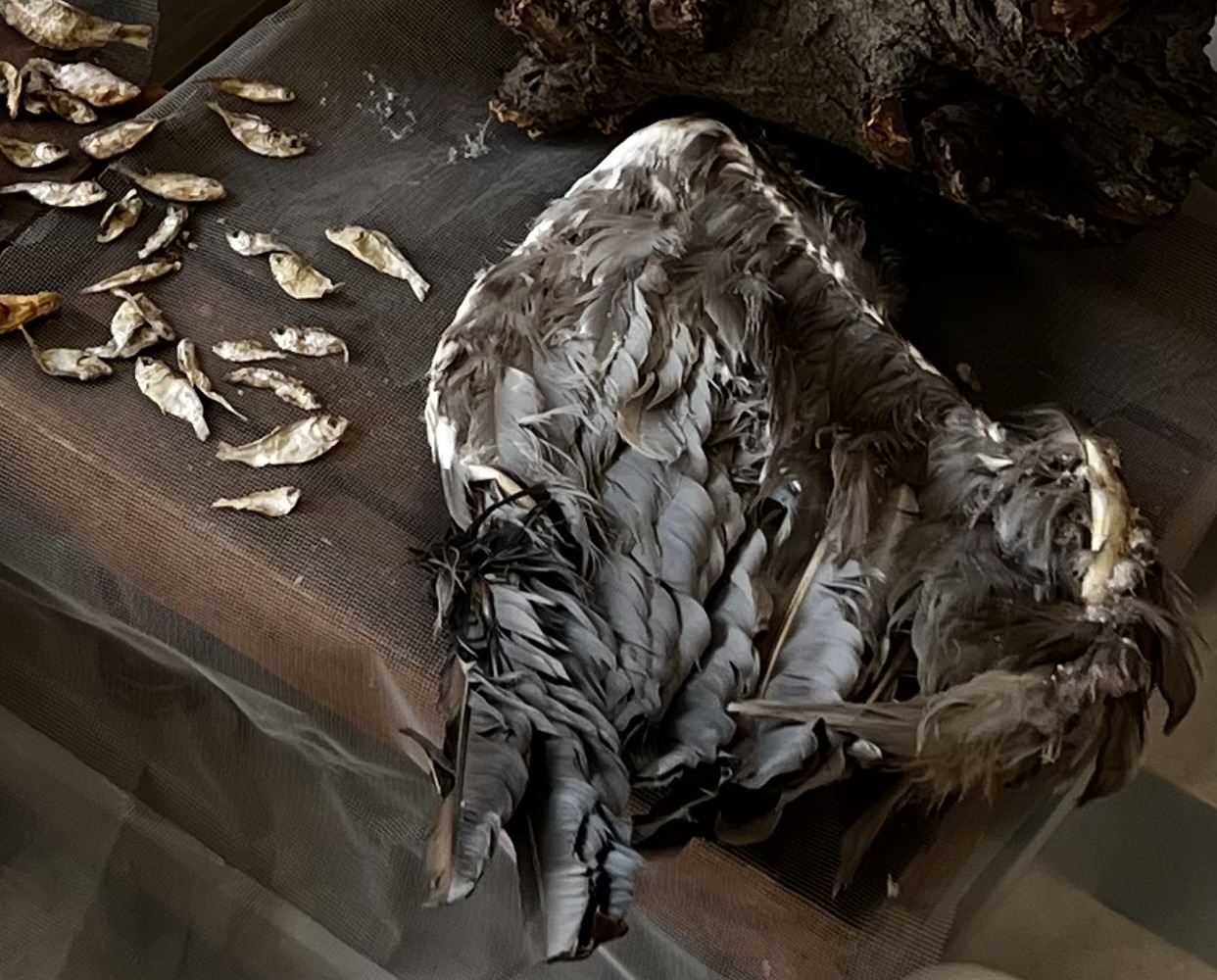
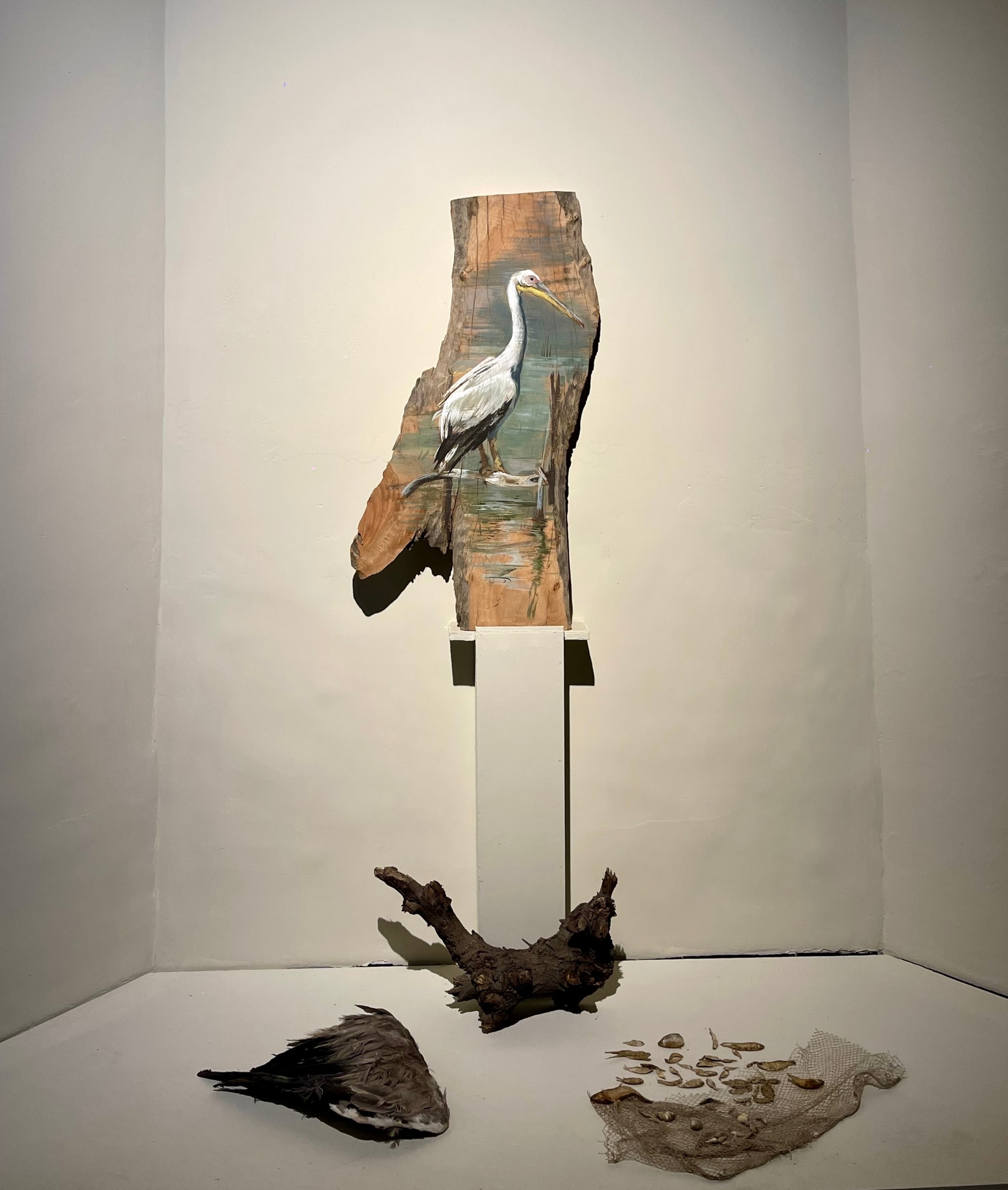
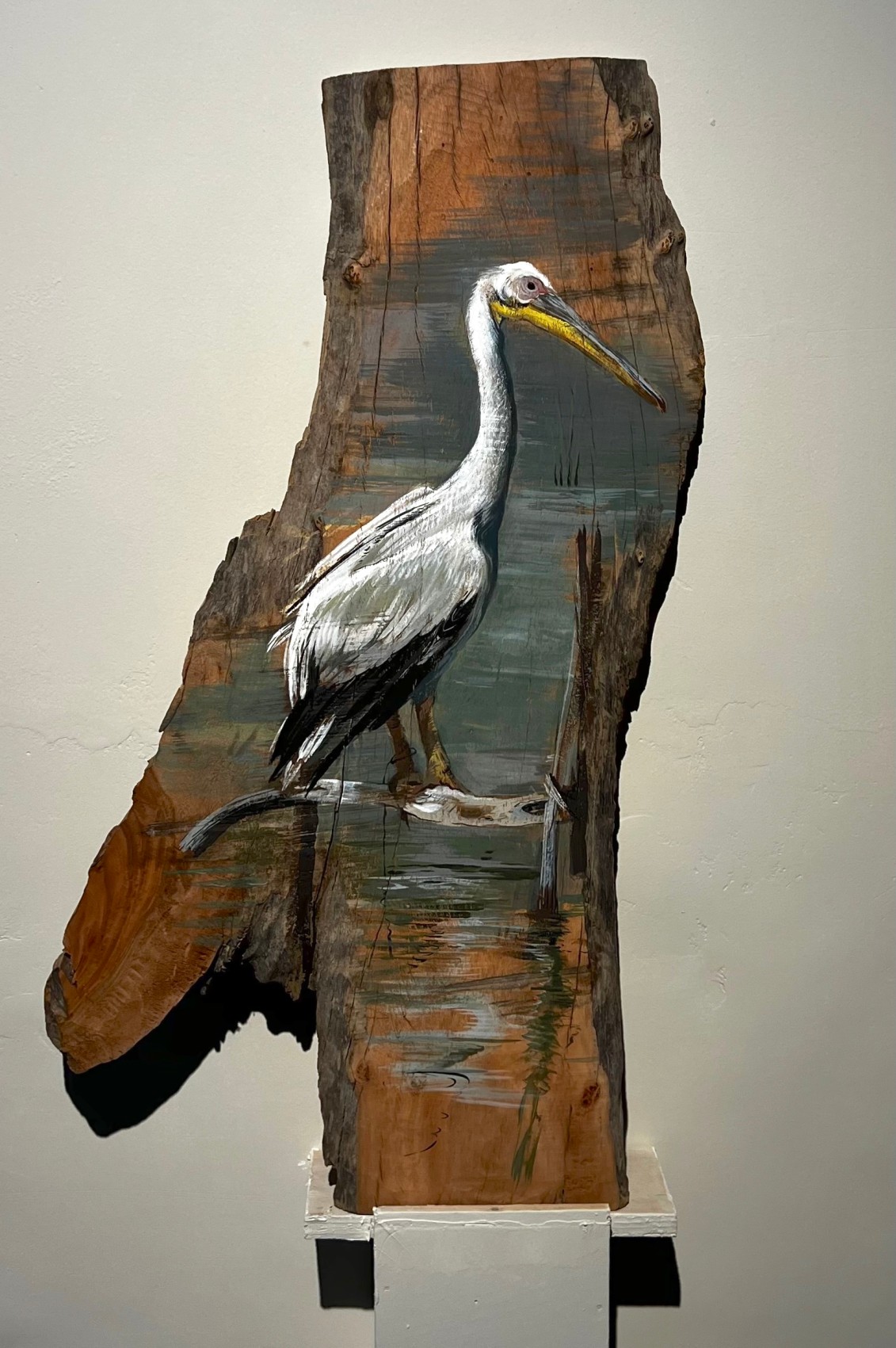
My field-responsive research challenged the pelican imagery I encountered in academic papers, where they appear large and majestic. At the lake, the pelicans I encountered were notably smaller with fragile necks, leading me to consider how prolonged ecological stress may register physically within animal anatomy. While preparing the display in my studio with materials collected from the site, I paint a pelican onto the wood to hold both image and material as ecological evidence, while the driftwood mimics the collapsing form of a dying bird, existing as residue rather than representation

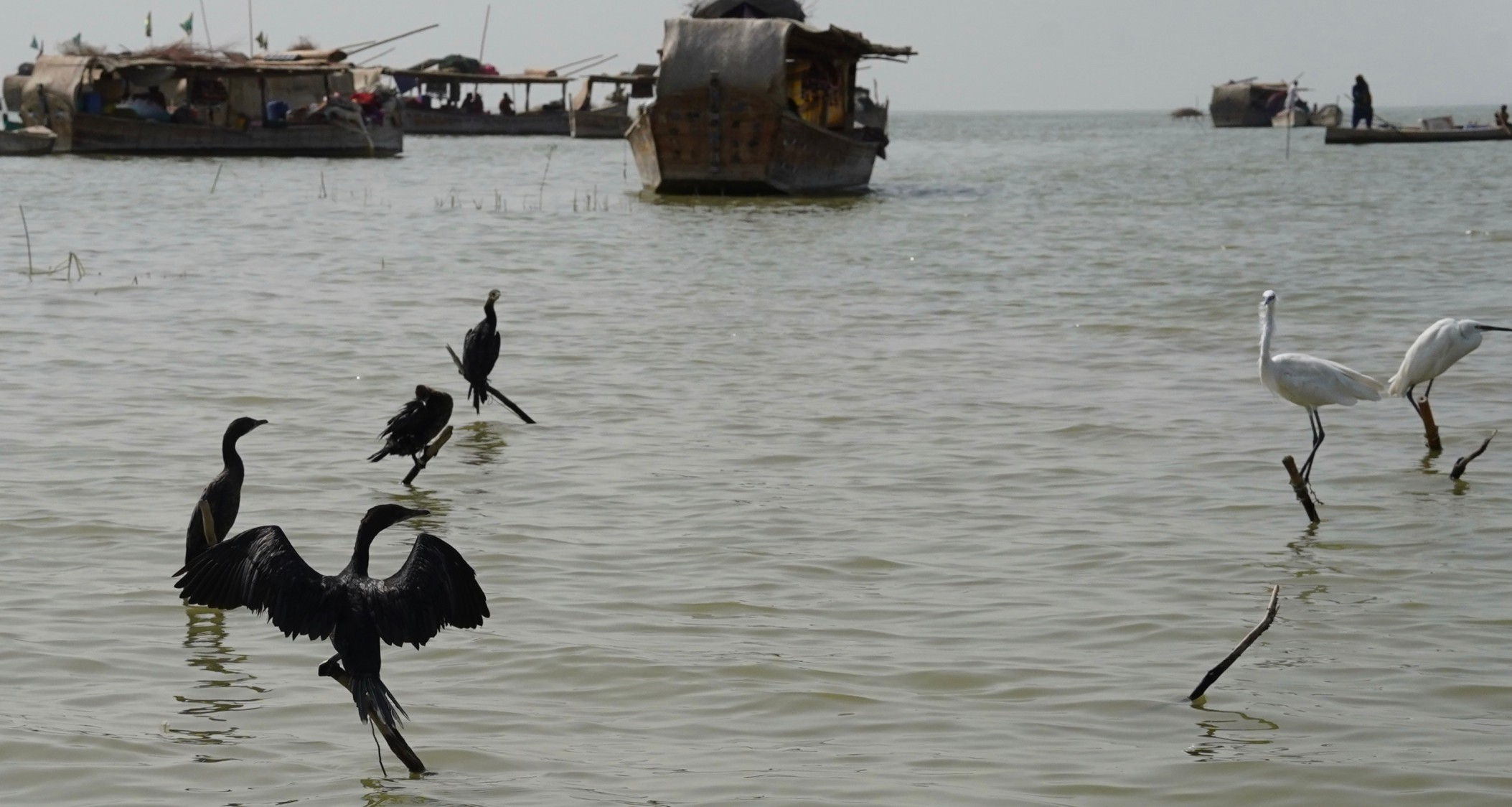
Birds tied up in Manchar Lake, photograph, 2025

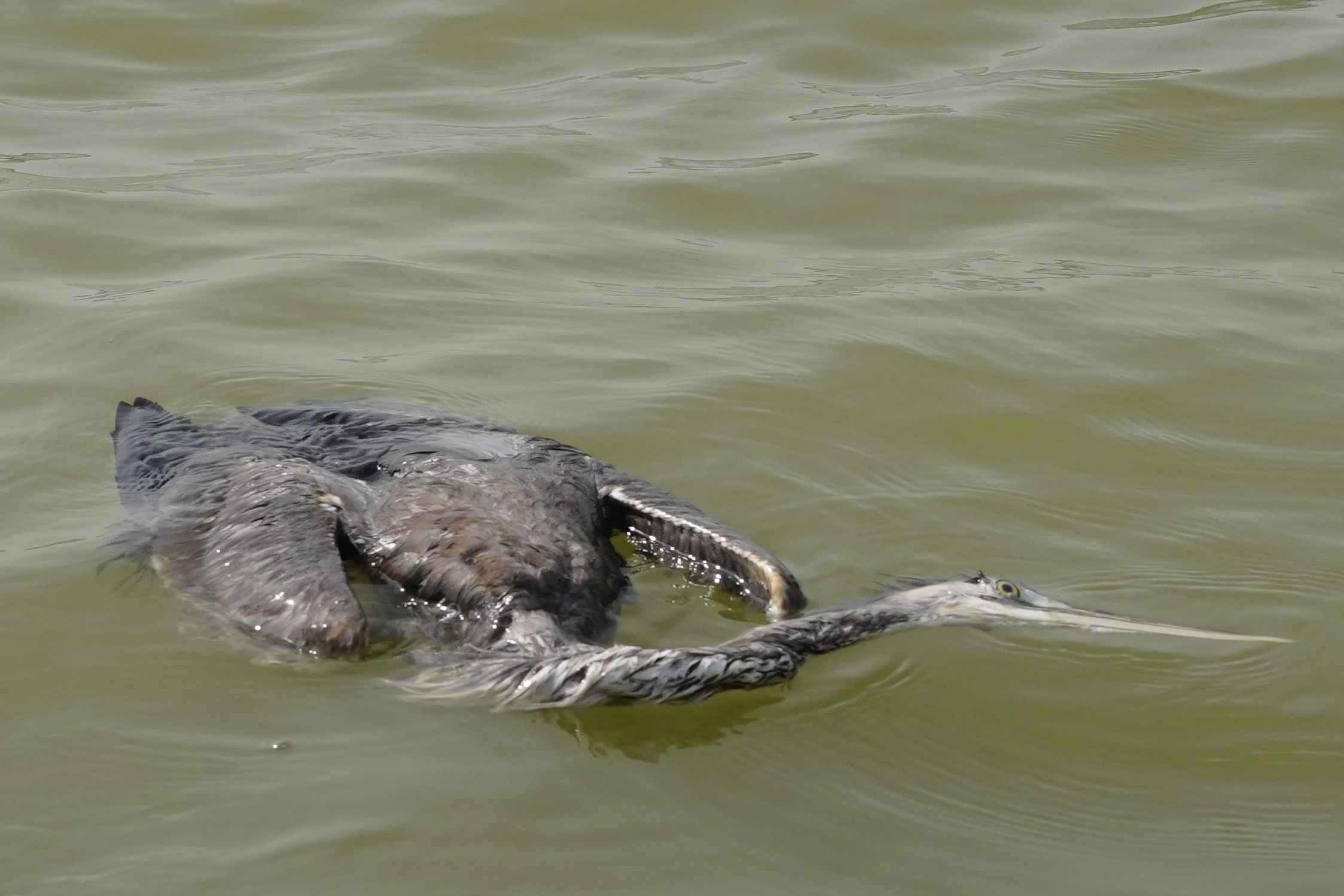
Dead bird in Manchar Lake, photograph, 2025

Along the Indus Flyway, Manchar lake hosts a rich biodiversity of birds, including cormorants, egrets, ducks hunted for food and pelicans, whose bodies I read as reflective of patriarchal hierarchies within ecological systems. These birds arrive from colder healthier regions but encounter a landscape shaped by deprivation and neglect, where the Mohanna community facing systematic marginalization, tethers them as part of survival strategies. This creates a form of camouflage: when other migratory birds of their species observe their restrained kind, they settle nearby in the water, unaware of humans lurking around. Unable to survive Pakistan’s extreme temperatures, I found one floating dead in the water
When the Birds Forgot to Fly, 2025, installation with chalk paint on salvaged wood from a Mohanna boat, found objects from Manchar Lake, size variable